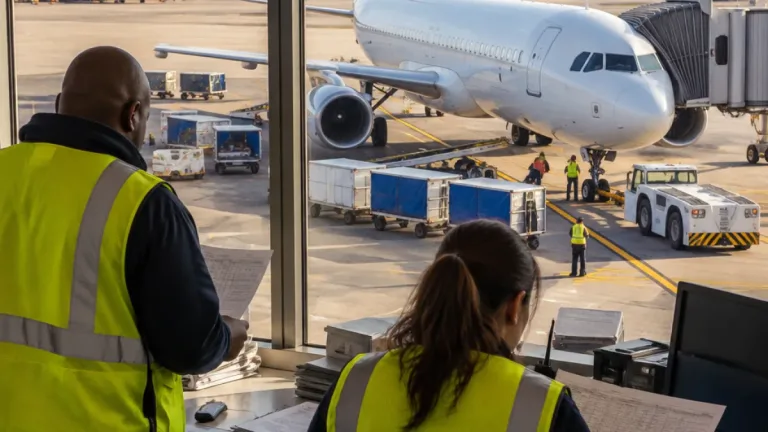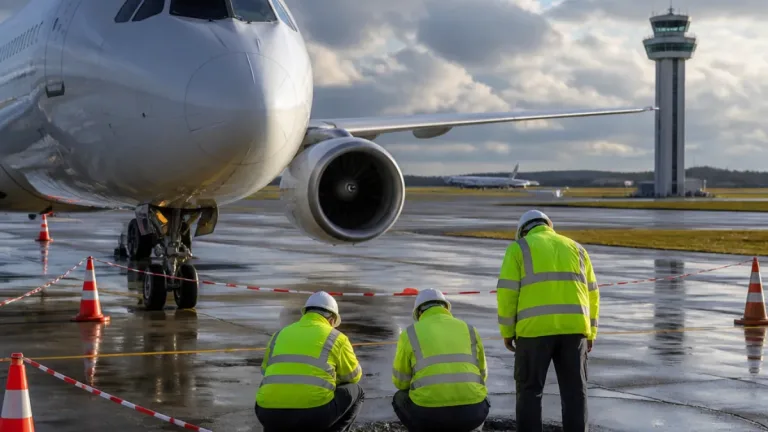
Approximately 350 flights were delayed at Chicago O’Hare International Airport (ORD) on Tuesday 24 November after a failure in the airport’s ground surveillance radar system disrupted arrivals during the Thanksgiving travel period. The Federal Aviation Administration (FAA) said the incident affected about 12% of O’Hare’s flights, with arriving services bearing most of the impact.
The equipment problem led the FAA to suspend selected flights bound for O’Hare before replacing the restriction with a ground delay programme. The ground stop began at about 15:06 Chicago local time, and the agency issued an advisory ending it at approximately 16:02 local time. Incoming aircraft were then permitted to resume their journeys at controlled intervals while repair work continued.
At the time of reporting, the FAA said 214 of the delayed flights were inbound to Chicago. Average arrival delays had reached 47 minutes. The agency’s ground delay programme was scheduled to remain in effect until 23:59 local time, while technicians worked on the affected equipment.
Regional departures affected
The restrictions applied to Chicago-bound services departing from four regional airports:
- Minneapolis-Saint Paul International Airport (MSP)
- Milwaukee Mitchell International Airport (MKE)
- Green Bay Austin Straubel International Airport (GRB)
- Des Moines International Airport (DSM)
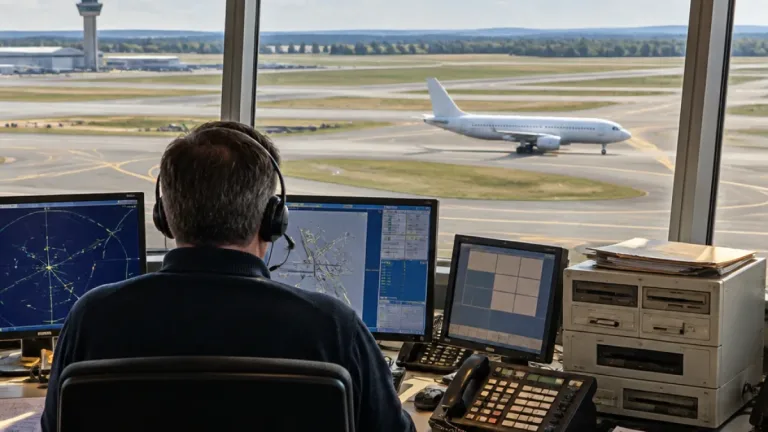
Ground surveillance radar is used by controllers to track aircraft and vehicles moving around runways and taxiways. Its failure therefore affected the management of surface operations at one of the United States’ major aviation hubs, which is a key base for both American Airlines and United Airlines.
Second disruption in two days
Tuesday’s technical failure followed a separate disruption at O’Hare one day earlier, when air traffic control staffing constraints resulted in another ground stop. The two events occurred as the FAA prepared for what it forecast would be the busiest Thanksgiving skies in 16 years, with more than 417,000 flights expected across the United States over the nine-day holiday period.
The FAA described the Tuesday restriction as a temporary operational measure while its technicians addressed the radar outage. The agency had not indicated that the measure represented a cancellation of the affected services; instead, the ground delay programme controlled the rate at which aircraft could approach O’Hare after the initial suspension had been lifted.
| Operational detail | Reported position |
|---|---|
| Airport | Chicago O’Hare International Airport (ORD) |
| Date | Tuesday 24 November |
| Delayed flights | Approximately 350 |
| Inbound delayed flights | 214 |
| Average delay | 47 minutes |
| Initial restriction | Ground stop, followed by a ground delay programme |
O’Hare’s disruption came at a particularly demanding point in the US holiday schedule, when high volumes of arriving and connecting traffic leave less flexibility to absorb restrictions. The FAA’s repair activity and the controlled release of Chicago-bound aircraft were intended to manage the immediate effect of the radar failure while normal airport operations were restored.