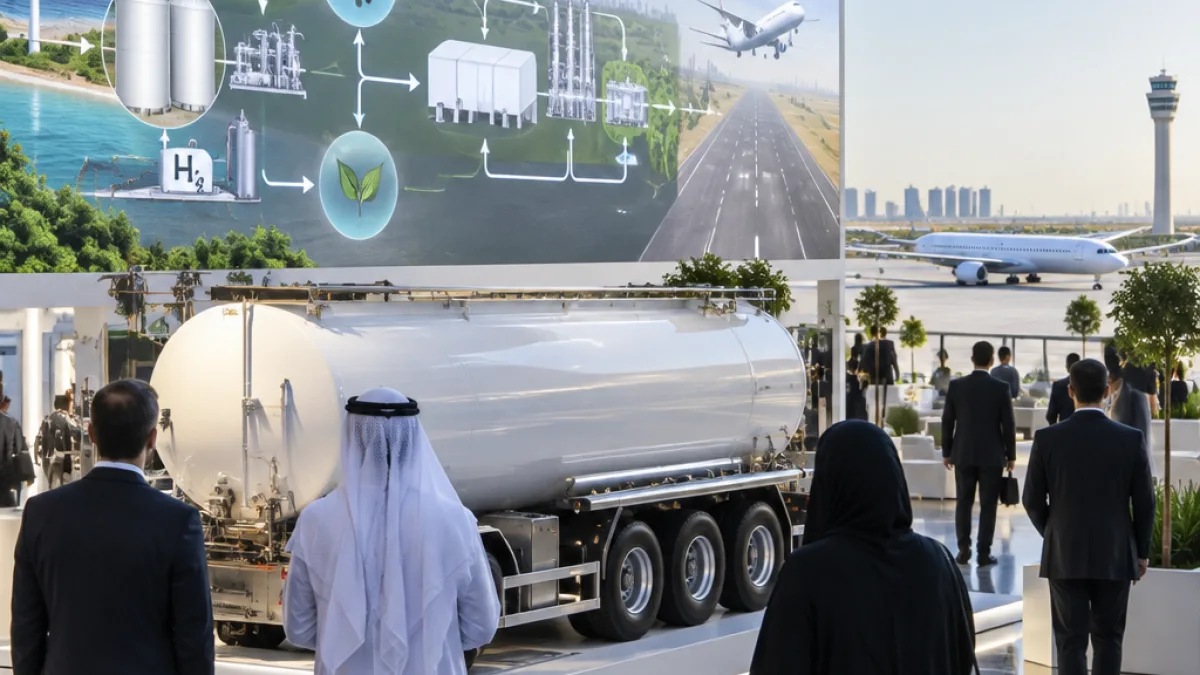
The Department of Energy – Abu Dhabi (DoE) and Evolve Fuels AG have agreed to investigate the potential development of synthetic sustainable aviation fuel in Abu Dhabi, including the investment, infrastructure and regulatory requirements that would be needed for local production.
The agreement was signed at ADIPEC 2026 and establishes a joint assessment rather than a firm commitment to build a production facility. The work will consider whether Abu Dhabi’s renewable electricity, hydrogen and carbon-capture resources can support an e-SAF industry, alongside the technical and commercial feasibility of manufacturing the fuel in the emirate.
Three areas of cooperation
The partnership will focus on connecting potential Abu Dhabi-based investors and commercial partners with Evolve Fuels’ international project pipeline. It will also examine the policy and regulatory framework required for future projects, as well as a possible roadmap for domestic production.
| Area | Scope of the assessment |
|---|---|
| Investment | Introducing Abu Dhabi investors and partners to Evolve Fuels’ project pipeline |
| Policy | Reviewing regulatory conditions that could support e-SAF development |
| Production | Assessing the feasibility and roadmap for manufacturing e-SAF in Abu Dhabi |
A joint steering committee will oversee the assessment. Its work is expected to cover the infrastructure and technologies needed for production, possible industry partners and customers, and opportunities for investment, knowledge transfer and the development of local capabilities.
“Sustainable aviation fuel has the potential to play an important role in the future of aviation. This agreement gives us an opportunity to assess how Abu Dhabi’s energy resources and industrial capabilities can support the development of this market, while creating opportunities for investment and technology partnerships. Our focus is on building the right regulatory and commercial foundations, so that any future projects are competitive, practical and able to deliver long-term value,” said Abdulaziz Mohammed Al Obaidli, Director General of Regulatory Affairs at the Abu Dhabi Department of Energy.
Production pathway under review
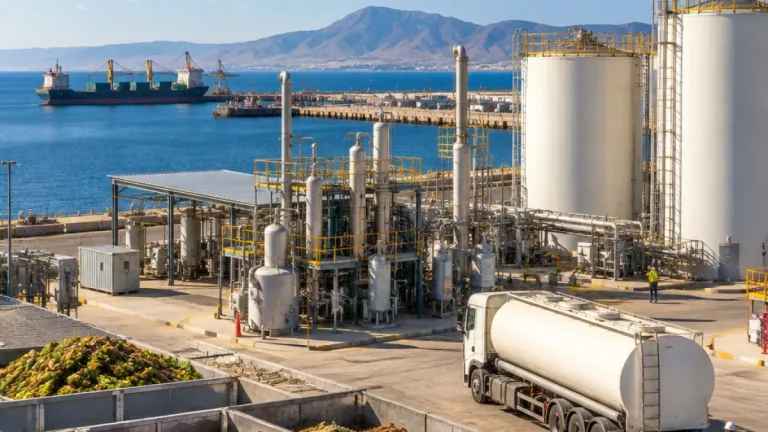
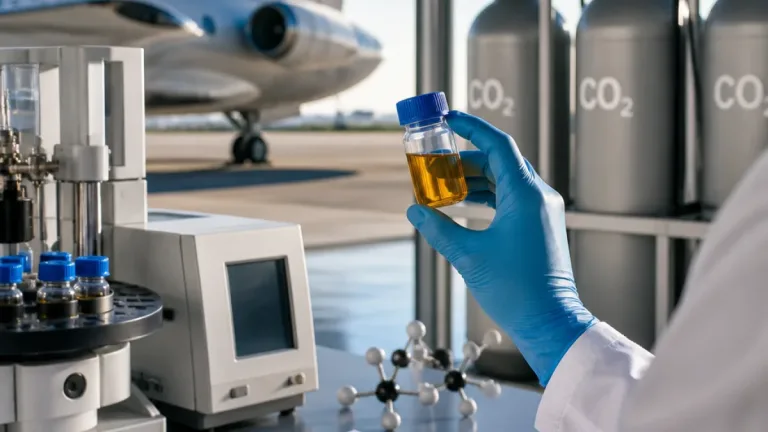
e-SAF can be made using renewable electricity, hydrogen and captured carbon dioxide. Unlike fuel pathways based on biological feedstocks, the proposed process would rely on synthetic inputs. The agreement will therefore examine not only whether those resources are available, but also the commercial and infrastructure conditions required to bring them together at aviation-fuel scale.
The assessment comes as airlines and policymakers seek ways to reduce aviation’s lifecycle emissions and as new fuel requirements in Europe and the UK are expected to increase demand for sustainable aviation fuel. It does not set a production volume, investment value or construction timetable for Abu Dhabi. Instead, the parties will use the study to determine whether projects can be developed on a practical and commercially competitive basis.
For the emirate, the initiative links aviation fuel development with wider industrial and energy priorities. The DoE will examine the policy and regulatory foundations for any future projects, while Evolve Fuels will bring its international development pipeline and focus on renewable fuels of non-biological origin. The parties will also consider potential customers and industry partners before deciding whether the opportunity can progress beyond assessment.
- The agreement covers investment connections, policy development and a local production roadmap.
- A joint steering committee will direct the technical and commercial assessment.
- No production volume, final investment decision or construction schedule has been announced.