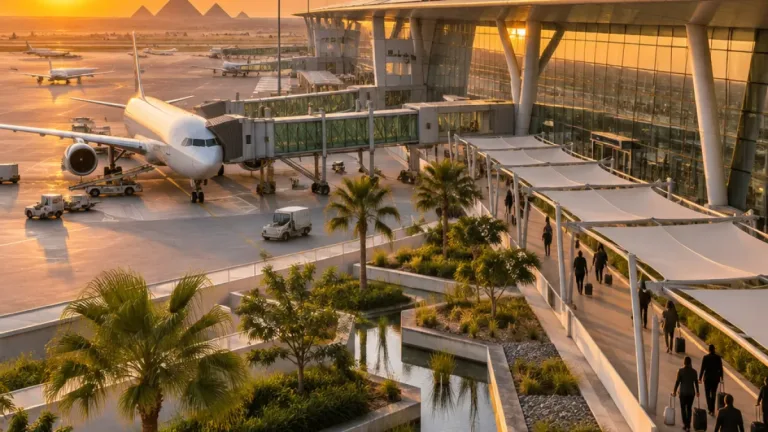
Shell has signed a long-term fuel purchase agreement covering output from a planned renewable-fuels facility at Port Nador in Morocco, securing exclusive rights to approximately 150,000 tonnes a year of sustainable aviation fuel (SAF), or an equivalent volume of hydrotreated vegetable oil (HVO).
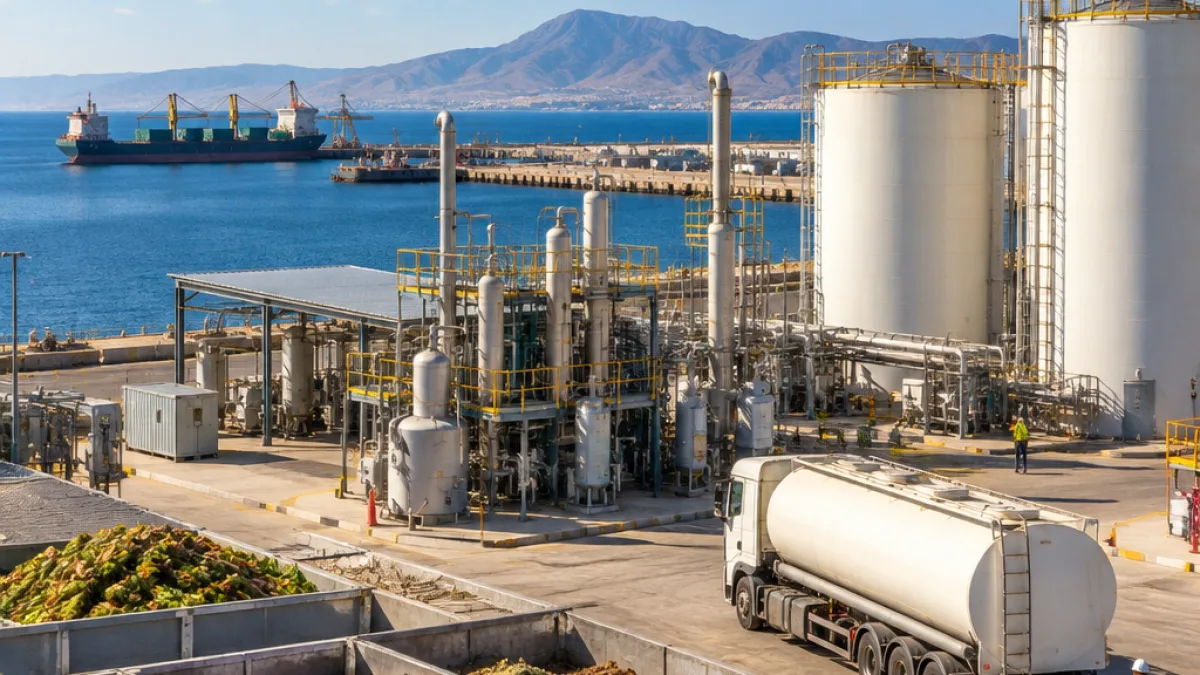
The agreement was concluded by Shell Trading Rotterdam B.V., the energy group’s Netherlands-based trading subsidiary, and Green Sky Manara LLC, part of clean-energy developer Green Sky Capital. The plant is scheduled to start operations in October 2028. Its planned output will also include bionaphtha and biopropane, giving the project a product mix extending beyond aviation fuel.
Planned production at Port Nador
Shell said the arrangement is intended to strengthen access to lower-carbon fuels while connecting production, feedstock sourcing and customers through its trading and logistics network. Richard Jory, Shell’s executive vice-president of Products Trading, said the deal would support the company’s efforts to develop supply chains that are both commercially viable and resilient.
“This agreement supports Shell’s strategy by helping customers access low-carbon fuels such as sustainable aviation fuel while building resilient and commercially viable supply chains,” said Richard Jory, Shell’s executive vice-president of Products Trading.
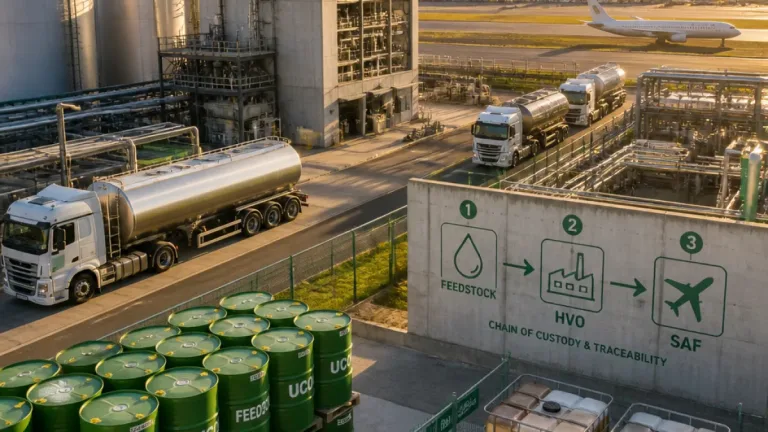
The fuel planned for the Moroccan facility is expected to be made from lipid-based materials. The feedstocks identified for the project include used cooking oil, animal fats and vegetable oils. Before it can be supplied as aviation fuel, the product will need to comply with the ASTM D7566 specification and carry sustainability certification under a scheme approved by the European Commission.
| Agreement detail | Reported terms |
|---|---|
| Purchaser | Shell Trading Rotterdam B.V. |
| Supplier | Green Sky Manara LLC |
| Location | Port Nador, Morocco |
| Planned start | October 2028 |
| Annual volume | Approximately 150,000 tonnes of SAF, or equivalent HVO |
Part of a wider SAF supply portfolio
The Moroccan project would add to Shell’s existing arrangements with SAF producers in Pakistan, Malaysia, Thailand and the United States. The company has also agreed to take fuel from a planned hydroprocessed esters and fatty acids facility being developed by Green Sky Capital in Egypt. That plant is expected to produce up to 145,000 tonnes of SAF annually from the end of 2027.
Shell currently supplies SAF at more than 80 airports in 18 countries and describes its business as one of the world’s largest SAF trading and supply operations. The agreements are being developed as airlines seek access to fuel capable of reducing lifecycle greenhouse gas emissions, while production capacity and the availability of suitable feedstocks remain constraints on wider use.
- The Nador facility is planned to begin operations in October 2028.
- Shell’s rights cover SAF or an equivalent quantity of HVO, alongside bionaphtha and biopropane.
- The proposed SAF is expected to use used cooking oil, animal fats and vegetable oils as feedstocks.
Industrial development around Nador West Med
The plant is part of industrial development associated with the Nador West Med port complex in Iaâzzanène, in Morocco’s Nador province. The complex represents 54 billion dirhams in public and private investment. Its eastern container terminal began operations on 31 October, while a western terminal is scheduled to open in April 2027.
The eastern terminal is expected to handle 3.5 million containers by 2030. The western facility would increase the complex’s total container capacity to 5.3 million. Alongside the container terminals, the site includes a 700-hectare industrial and logistics platform and facilities for liquefied natural gas and hydrocarbons.