Korean Air reported record third-quarter revenue of KRW 5.0448 trillion on 15 October 2026, supported by stronger passenger demand and a substantial increase in cargo revenue. The South Korean airline’s preliminary, non-consolidated figures showed revenue up 26% year on year, while operating profit rose 12% to KRW 421.2 billion.
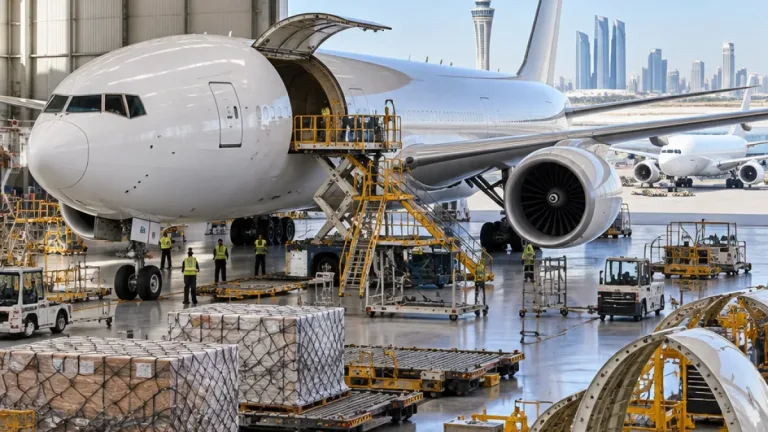
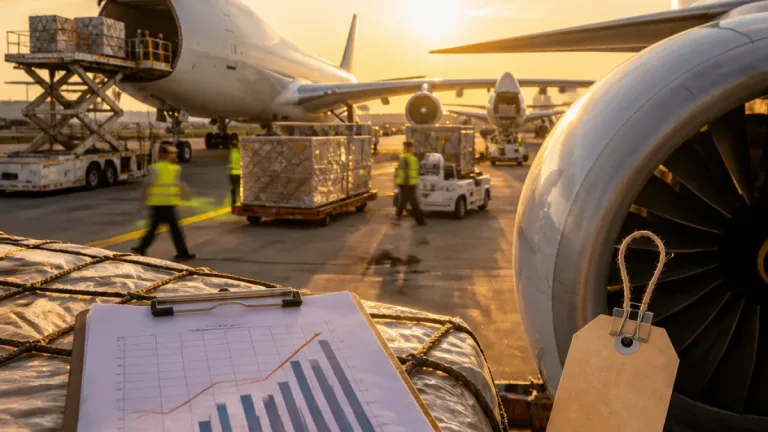
The cargo operation generated KRW 1.4323 trillion in the quarter, an increase of KRW 365.6 billion compared with the same period a year earlier. Korean Air attributed the performance to demand for high-value freight linked to artificial intelligence and semiconductor components, allowing the airline to adjust capacity towards stronger regional markets.
Cargo growth alongside network expansion
The result places technology-related freight at the centre of Korean Air’s latest quarterly performance. The airline operates a combined passenger and air freight business from its Incheon base, with international exposure across the Asia-Pacific region and beyond. Its cargo capacity can be adjusted alongside the wider network, an approach the company said would remain important during the year-end peak.
Passenger revenue also increased, reaching KRW 2.9174 trillion after rising by KRW 496.3 billion year on year. Korean Air said stronger inbound and transit traffic through Incheon, together with additional capacity on routes to the Americas and Japan, offset softer outbound demand from South Korea.
| Measure | Q3 2026 | Year-on-year change |
|---|---|---|
| Total revenue | KRW 5.0448 trillion | +26% |
| Operating profit | KRW 421.2 billion | +12% |
| Cargo revenue | KRW 1.4323 trillion | +KRW 365.6 billion |
| Passenger revenue | KRW 2.9174 trillion | +KRW 496.3 billion |
Fuel remains a margin pressure
Despite the improvement in operating profit, fuel costs remain a constraint on the airline’s margins. Korean Air said the pressure was expected to continue into the fourth quarter as geopolitical tensions kept energy costs elevated. The carrier plans to focus on inbound and transit passengers while using flexible cargo capacity to address demand during the year-end peak.
The airline also reported net income of KRW 929.7 billion, compared with KRW 91.9 billion a year earlier. Korean Air attributed part of the increase to favourable foreign-exchange translation effects, meaning that the net-income improvement is less representative of recurring operating performance than the revenue and operating-profit figures.
- Cargo revenue reached KRW 1.4323 trillion in the third quarter.
- Artificial intelligence and semiconductor components supported demand for high-value freight.
- Fuel expenses are expected to remain a key pressure in the fourth quarter.
Group changes remain in view
Korean Air is preparing to integrate Asiana Airlines, a combination intended to expand the group’s network and operating platform. The carrier also has Delta Air Lines as a named transpacific joint-venture partner. Against that backdrop, the latest figures show the importance of both passenger flows through Incheon and cargo connected to technology supply chains to the group’s performance.
The quarterly figures were preliminary and non-consolidated. Korean Air’s stated fourth-quarter priorities will therefore combine continued attention to inbound and transit passenger demand with the use of cargo capacity where market conditions are strongest, while fuel costs remain an operating risk.