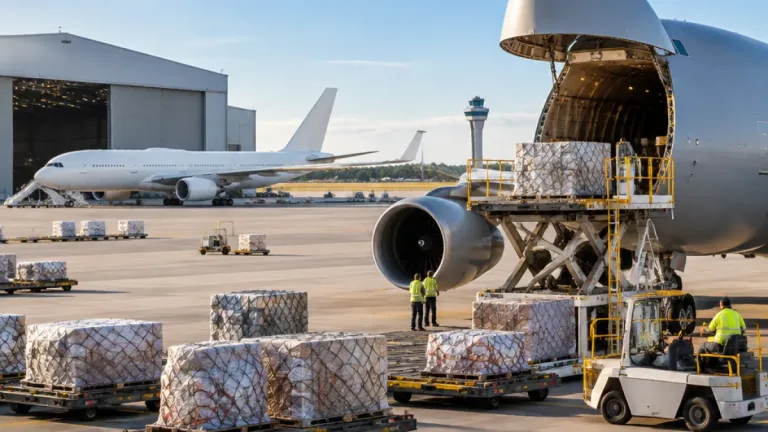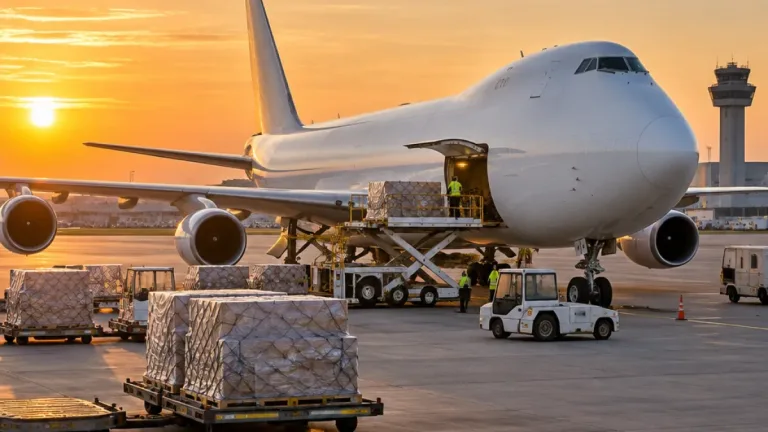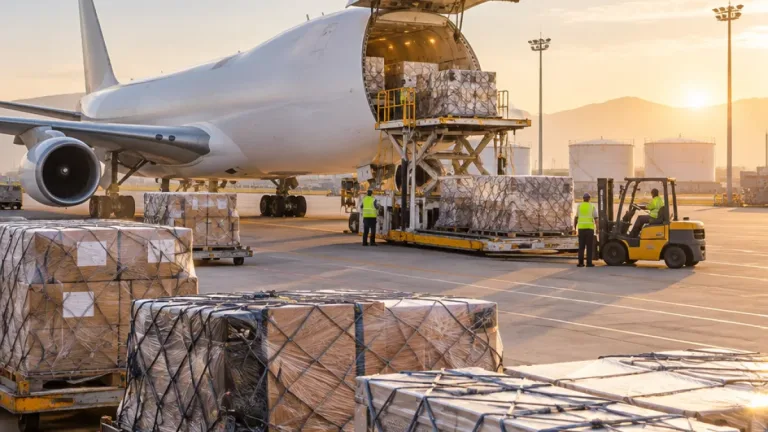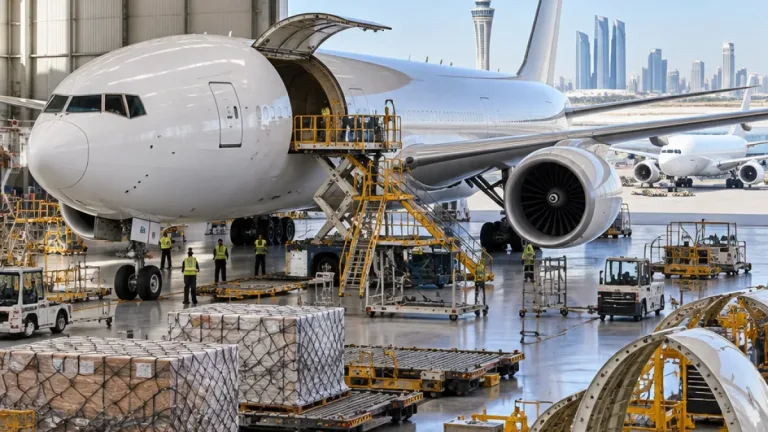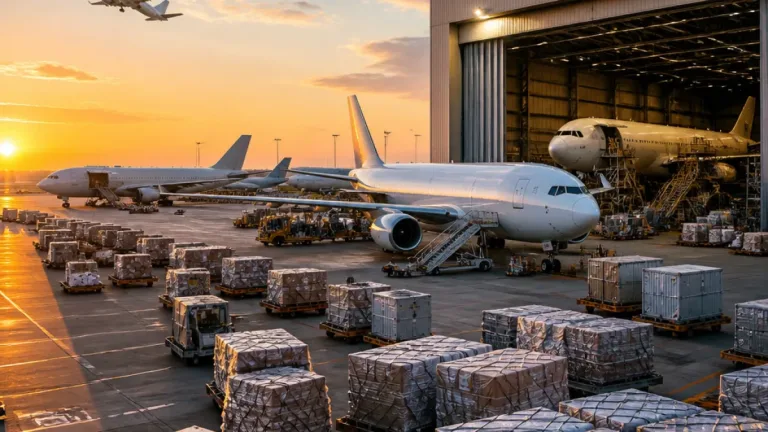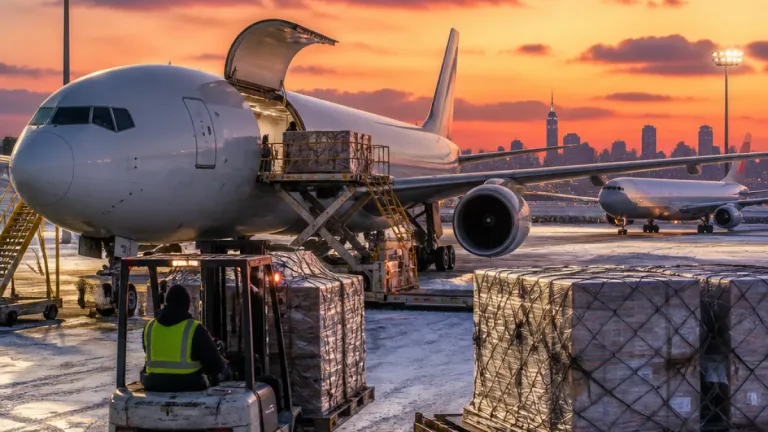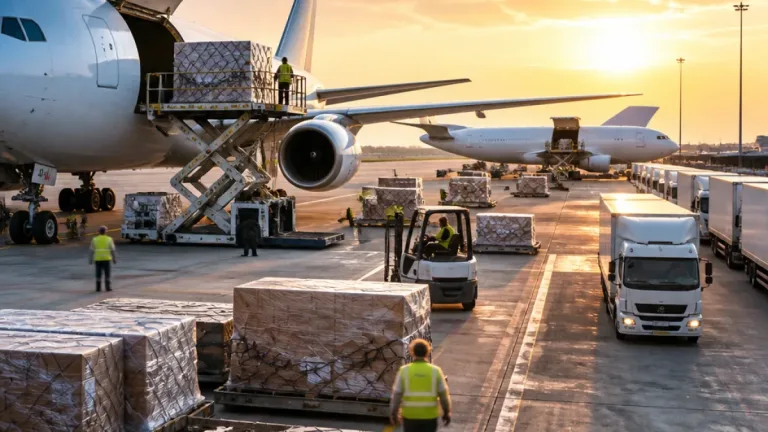
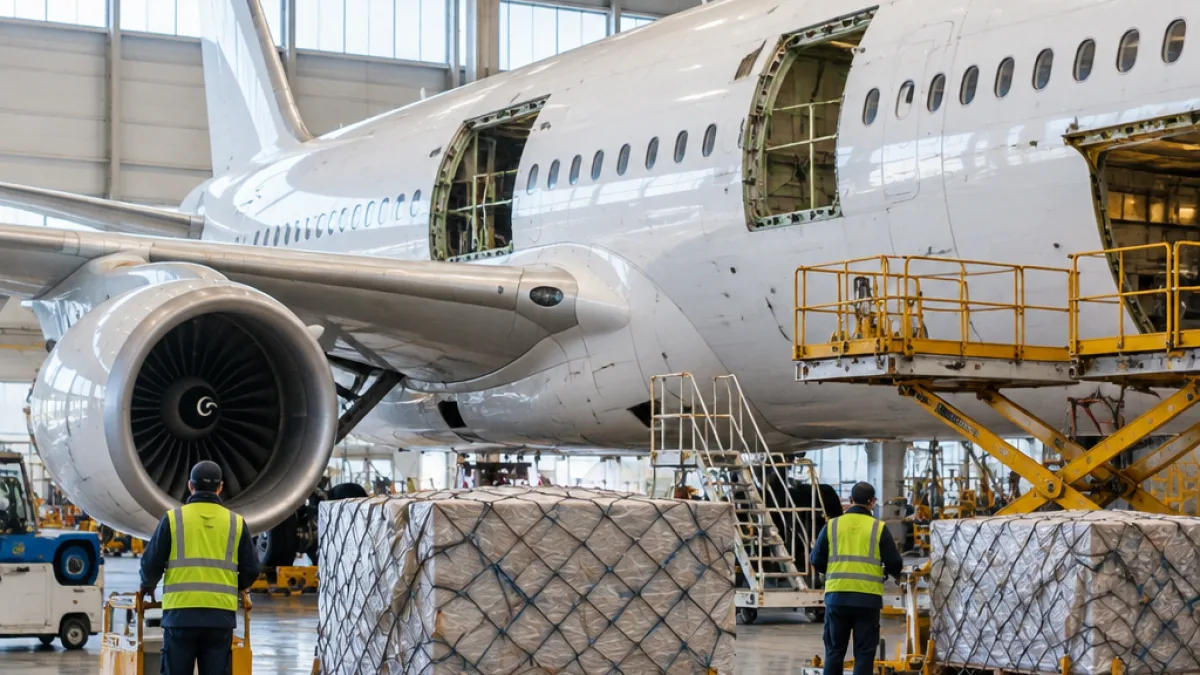
Air India is examining the conversion of passenger aircraft into dedicated freighters as the Tata Group-owned airline seeks to increase its presence in India’s expanding air cargo market. The proposal was outlined by Singapore Airlines Chief Executive Goh Choon Phong at a post-results briefing on 12 November 2026.
Singapore Airlines holds a 25.1% stake in Air India. The proposal identifies freight as a potential additional revenue stream under Air India Chief Executive Tewolde Gebremariam, but it remains at an exploratory stage. Air India has not disclosed which aircraft could be converted, how many might be involved, the routes they would serve or when any dedicated freighter operation could enter service.
Dedicated capacity under consideration
Air India currently transports cargo in the holds of its scheduled passenger aircraft. The airline says it handles more than 400,000 tonnes annually across its network, including perishables, express consignments and temperature-sensitive shipments such as vaccines and medical supplies.
Converting passenger aircraft would give the carrier capacity that could be scheduled around freight demand rather than being determined by the available space beneath passenger services. However, no firm conversion programme, aircraft commitment or operating schedule has been announced.
| Item | Reported position |
|---|---|
| Current cargo operation | Freight carried in the holds of scheduled passenger aircraft |
| Annual cargo handled | More than 400,000 tonnes |
| Conversion proposal | Passenger aircraft being considered for dedicated freighter use |
| Aircraft, fleet and routes | Not disclosed |
| Entry-into-service date | Not disclosed |
Indian cargo volumes continue to rise
The proposal comes as India’s airport cargo market records further growth. Indian airports handled 1.86 million tonnes of air cargo between April and August 2026, an increase of 12% compared with the same period a year earlier, according to the Ministry of Statistics and Programme Implementation.
Delhi handled approximately 530,000 tonnes during the five-month period, making it the largest-volume Indian airport in the figures reported. The scale of the market provides a wider demand backdrop for Air India’s consideration of dedicated freighter capacity, although the airline has not linked a specific conversion plan to an individual airport or trade lane.
Faster connections through Delhi
Air India has also been testing changes intended to improve the movement of cargo through its passenger network. In June 2026, it began a pilot using India’s revised cargo transshipment procedures on the Chennai–Delhi–Frankfurt corridor.
Under the pilot, eligible shipments remained securely packed while transferring between flights at Delhi, removing the requirement to rescreen individual packages in transit. Air India said the change reduced average cargo connection times at Delhi from 36–48 hours to 5–8 hours. Average daily volumes on the corridor increased from 2.2 tonnes to 4.5 tonnes during the trial.
The government later approved an expansion of the arrangement for eligible shipments originating in Ahmedabad, Bengaluru, Chennai, Hyderabad and Mumbai and moving via Delhi to Copenhagen, Frankfurt and London Heathrow. The proposed freighter conversions would therefore sit alongside an existing effort to improve the speed and handling efficiency of cargo carried across Air India’s passenger network.
- Air India handles more than 400,000 tonnes of cargo annually in passenger aircraft holds.
- Indian airports processed 1.86 million tonnes between April and August 2026, up 12% year on year.
- No aircraft type, conversion quantity, route plan or entry-into-service date has been announced.