Major US carriers have begun to temper growth expectations and pare profit guidance after jet fuel prices accelerated faster than revenue gains, the airlines disclosed in recent results and commentary. The mismatch between soaring fuel bills and higher ticket yields has prompted Delta Air Lines, Southwest Airlines and American Airlines to lower their 2026 earnings forecasts; United Airlines, which does not publish a full-year outlook, expects fourth-quarter profit “well below” Wall Street estimates.
Fuel costs outpace fare increases
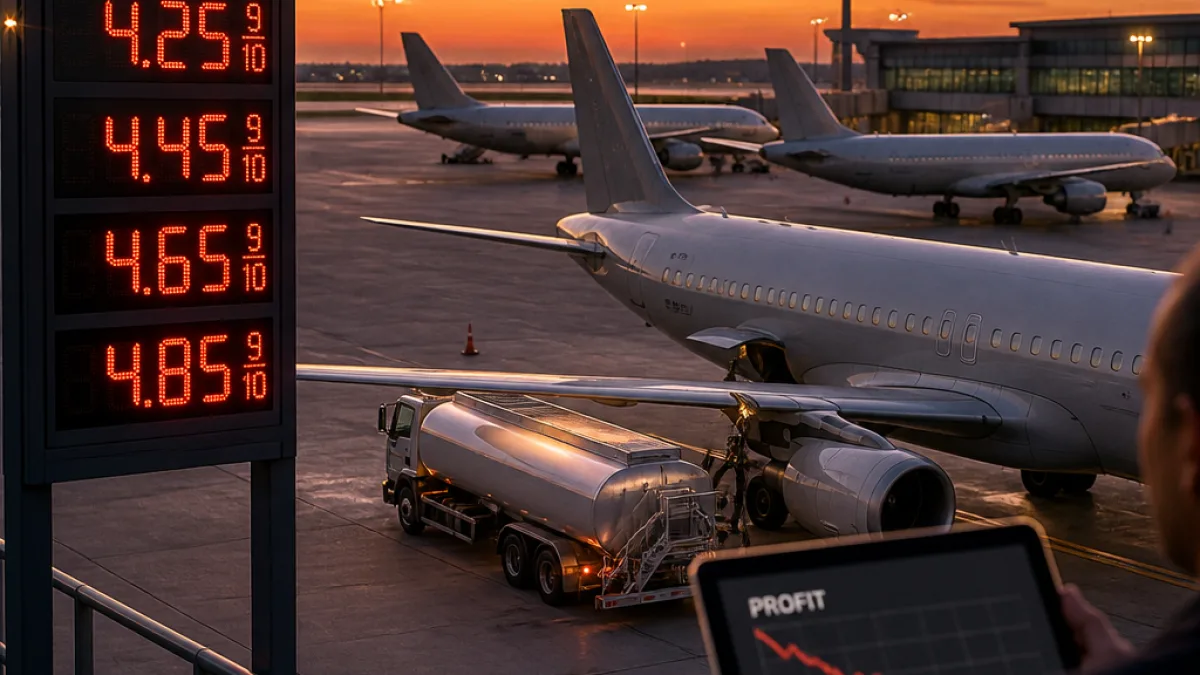
Average US airfares rose by nearly 23% year-on-year in the seven months through September, according to the US Department of Labor, reflecting robust demand and elevated pricing. Yet airlines now anticipate paying between US$4.25 and US$4.85 a gallon for jet fuel, up from levels well under US$4 a gallon in the third quarter, leaving margins under pressure.
“The fourth quarter is shaping up to be an operationally tough quarter with jet fuel prices expected to remain elevated, diminished capacity plans, but durable revenue trends from consumers,” Liam Dorsey, analyst at Third Bridge, said. “The big question that remains is how long consumer resiliency lasts.”
The carriers nonetheless reported record third-quarter revenue, highlighting that higher average fares and ancillary income continue to support top-line performance. But the additional revenue has not fully absorbed rising fuel costs: United reported it had recovered only 72% of its extra fuel expenditure through third-quarter revenue gains.
Capacity trimming and pricing leverage
With the ability to raise fares further constrained by the risk of chipping away at demand, US airlines are using capacity discipline as a lever to preserve price levels and protect profitability. Executives have signalled that network expansion may slow into next year as carriers seek to balance load factors and yields against mounting fuel bills.
- Delta Air Lines, Southwest Airlines and American Airlines have trimmed 2026 earnings guidance.
- United Airlines projected fourth-quarter profit well below Wall Street expectations and reported 72% recovery of its additional fuel costs to date.
- Jet fuel price guidance has moved to US$4.25–4.85/gal, up from well under US$4/gal in Q3.
The rise in fuel prices is occurring against a backdrop of sustained geopolitical risk: the conflict involving Iran has entered its eighth month, a factor cited by industry observers as contributing to elevated energy prices and uncertainty over how long demand resilience among travellers will hold.
Implications for networks and revenues
Airlines had earlier expected that a combination of higher base fares, ancillary revenues and loyalty-programme income would offset increased fuel costs. That assumption has weakened as fuel moved higher than many carriers anticipated. In response, some executives have warned of further curbs to flight growth next year to sustain yields; others are re-evaluating capacity deployment across domestic and international markets.
| Carrier | Action reported | Fuel recovery / guidance |
|---|---|---|
| Delta Air Lines | Lowered 2026 earnings forecast | Industry guidance US$4.25–4.85/gal |
| Southwest Airlines | Lowered 2026 earnings forecast | Industry guidance US$4.25–4.85/gal |
| American Airlines | Lowered 2026 earnings forecast | Industry guidance US$4.25–4.85/gal |
| United Airlines | Did not give a full-year forecast; Q4 profit expected below estimates | 72% of additional fuel costs recovered through Q3 revenue |
For route development teams, airports and commercial planners, the shift towards capacity restraint could affect seat availability on key markets, frequency decisions and seasonal schedules. Airlines that opt to shrink planned growth can expect to influence competitive dynamics on transcontinental and transatlantic lanes, where capacity rebalances typically feed through to fares and distribution strategies.
Analysts and airline managers will be watching both the trajectory of jet fuel and how long consumers maintain current spending patterns on air travel. The balance between fare elasticity and network supply decisions will be a central industry dynamic as carriers finalise winter schedules and consider planning assumptions for 2027.