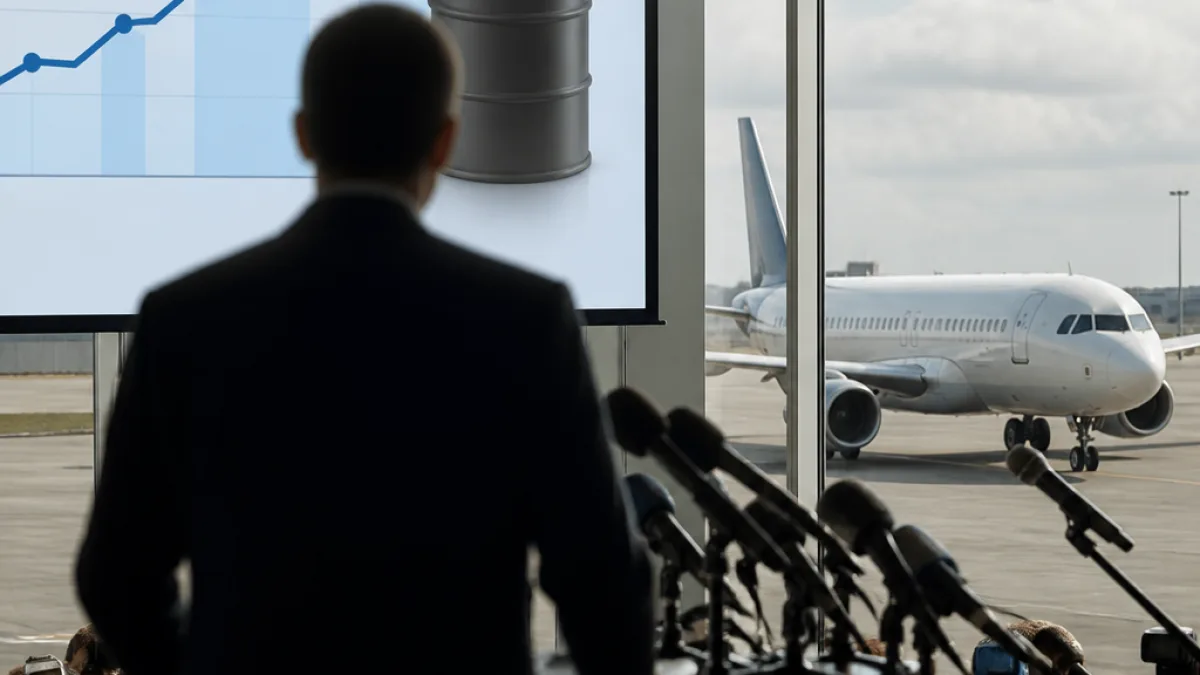
Michael O’Leary, chief executive of Ryanair, has issued a stark forecast that short-haul airfares in Europe will rise substantially next year as the industry grapples with sharply higher jet fuel prices and the unwinding of fuel hedges.
O’Leary predicts 10–20% increase in fares
Speaking at a news conference in Brussels, Mr O’Leary said passengers should expect “the biggest increase in airfares, I would say, in history in Europe for the next 12 months.” He put a numeric range on that prediction, saying:
“You're going to see airfares rise next year in Europe, I think by 10, 15, maybe 20%,”
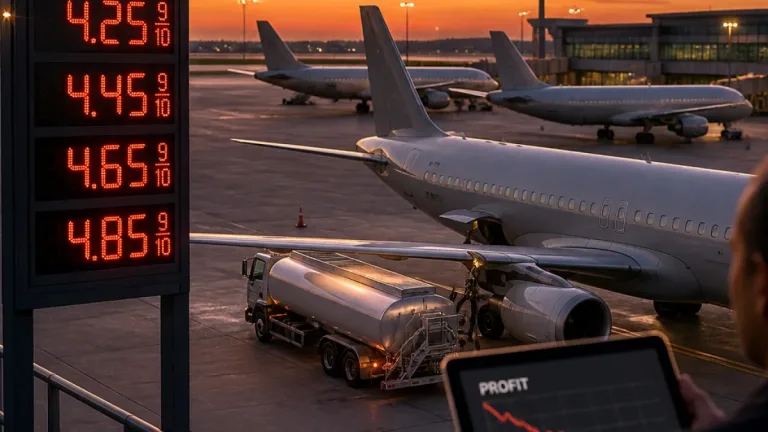
Ryanair attributes the pressure to an escalation in jet fuel prices since the outbreak of the conflict in Iran in February. The carrier said prices had been expected to climb by around 70% across 2026, averaging $152 (£114) a barrel this year compared with $90 (£67.20) in 2025.
Hedging, capacity and company forecasts
Ryanair said it has hedged about 80% of its jet fuel for 2027 at $67 a barrel, a position the airline says leaves it well placed to record another profitable year. But the company warned that many competitors are less well hedged and will face higher unhedged fuel costs when hedges unwind from next spring, forcing them to purchase a larger proportion of jet fuel at market rates.
The carrier cautioned that continued high oil prices could prompt capacity reductions across Europe as some airlines “struggle to maintain capacity or even survive” the coming winter. In line with that risk assessment, Ryanair has adjusted its passenger target for 2027, lowering its air traffic goal from 216 million to 214 million.
“If high oil prices continue through to 2027, Ryanair believes short-haul airfares in Europe will increase materially to reflect higher oil prices, as some less well-hedged competitors will struggle to maintain capacity or even survive this coming winter season,”
Industry implications
The comments underline three immediate pressures on the short-haul market:
- Higher fares for passengers across Europe if airlines pass on increased fuel costs;
- Potential capacity tightening as weaker, less-hedged carriers reduce frequencies or leave markets;
- Competitive reshaping driven by bankruptcies or takeover activity where airlines cannot absorb higher operating costs.
Ryanair also noted its own seasonal commercial response, having previously said it is “sensible” to reduce exposure during the unprofitable winter schedule between November and March.
Numbers quoted by Ryanair
| Item | Figure |
|---|---|
| Projected airfare increase (O’Leary) | 10–20% |
| Average oil price, 2026 (as cited) | $152 (£114) per barrel |
| Average oil price, 2025 (as cited) | $90 (£67.20) per barrel |
| Ryanair jet fuel hedged for 2027 | ~80% at $67 per barrel |
| Ryanair 2027 air traffic target | Revised from 216 million to 214 million passengers |
Mr O’Leary’s comments represent a direct warning from one of Europe’s largest short-haul carriers about the potential for market-wide fare inflation and capacity adjustment driven by fuel costs and the timing of hedging contracts. The airline industry’s exposure to oil price movements and the structure of hedging programmes will be central to carriers’ winter strategies and 2027 planning.