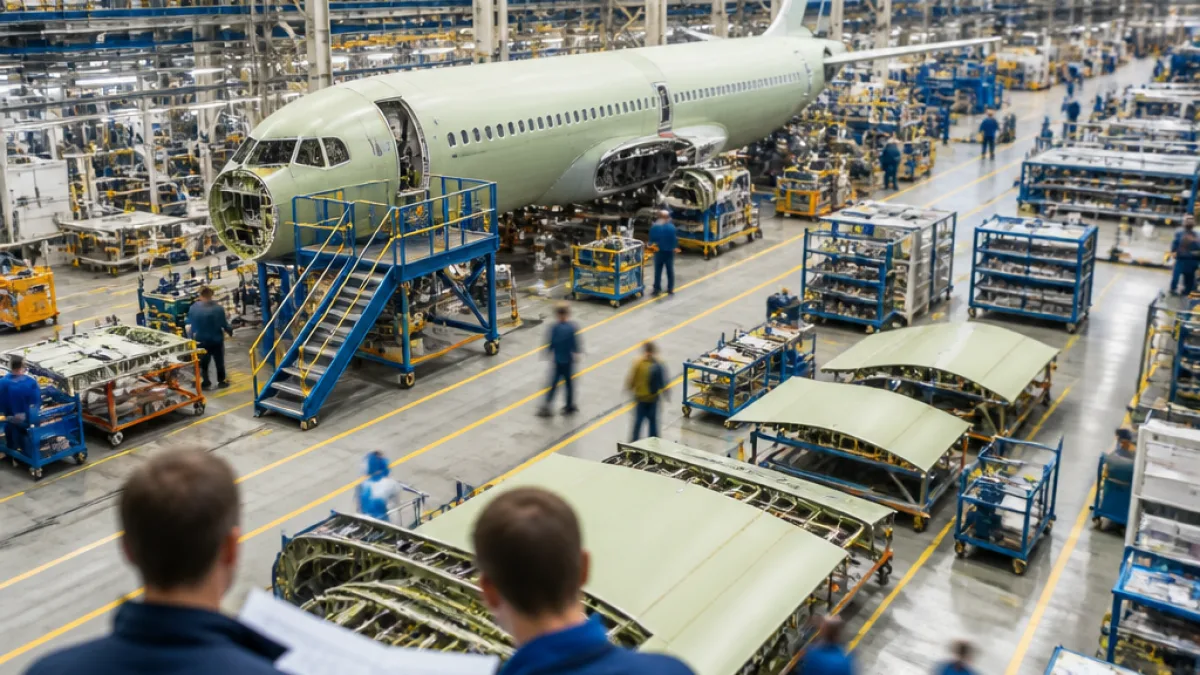
Boeing posted a larger third-quarter adjusted loss than market expectations as persistent supply-chain constraints and production delays weighed on its commercial aeroplane division.
Financial highlights and division performance
The company reported an adjusted loss of 34 cents per share for the quarter through September, versus analysts’ consensus of 21 cents, according to LSEG data cited in the results. Boeing Commercial Airplanes recorded revenue of US$10.7 billion in the period and an operating loss of US$697 million, with the division’s margin shrinking by 6.5% compared with a contraction of 48.3% a year earlier.
| Division | Key figure | Metric |
|---|---|---|
| Boeing Commercial Airplanes | US$10.7 billion | Revenue |
| Boeing Commercial Airplanes | US$697 million | Operating loss |
| Boeing Global Services | US$1 billion | Operating earnings |
| Boeing defence | Nearly US$500 million | Quarterly earnings |
| Company net debt | US$25.2 billion | End of quarter |
Boeing said its defence division benefited from higher deliveries, improved operational performance and the US$252-million sale of a subsidiary, producing almost US$500 million in quarterly earnings and an operating margin of 6.2%, up from 1.7% a year earlier. Boeing Global Services earned US$1 billion and posted an operating margin of 18.3%.
Production, certification and backlog
Despite progress on certification and contract wins, production hurdles remained central to the commercial arm’s results. Boeing secured certification for the 737 MAX 7 during the quarter and the text notes certification of the larger MAX 10 followed in October. The company also won the US Navy’s sixth-generation F/A-XX fighter contract during the period.
Management highlighted ongoing difficulties in raising 737 output levels. Boeing has aimed to increase production from 42 aircraft a month to 47, a target it hopes to reach in the summer, but progress has been constrained by parts availability. At an industrial conference in September, the company said it had not been able to make wings fast enough to support the ramp-up.
“Expectations are rising, and they should. We have a stronger foundation than a year ago, but we also have more work to do to deliver on our backlog, strengthen our culture, and improve how we work every day,” Kelly Ortberg said in a memo to employees after the results.
The firm ended the quarter with US$25.2 billion in net debt, a small reduction from US$25.9 billion at the previous quarter end.
Market reaction and outlook
Shares of the company fell around 2.5% in pre-market trading on the day the results were published. Boeing characterised the quarter as a mix of achievements and continuing operational work: certification milestones and contract awards sat alongside less profitable jetliner deliveries and higher production costs driven in part by supply-chain pressures.
- Certification progress: 737 MAX 7 certified in the quarter; MAX 10 certification followed in October.
- Production challenge: Difficulty increasing 737 output from 42 to 47 units a month due to wing production and supply issues.
- Division performance: Defence and Services returned stronger margins while commercial aircraft operations posted an operating loss.
The results underscore the contrast within Boeing’s business: defence and services units are delivering improved margins and cash generation, while the commercial aeroplane division remains hampered by production and supply-chain constraints that continue to affect profitability.