The Federal Aviation Administration (FAA) has issued a Special Airworthiness Certificate that permits BETA Technologies to operate its ALIA-A250 electric vertical takeoff and landing aircraft with prospective customers, operators and other stakeholders aboard, the company and the FAA announced.
What the approval allows and what it does not
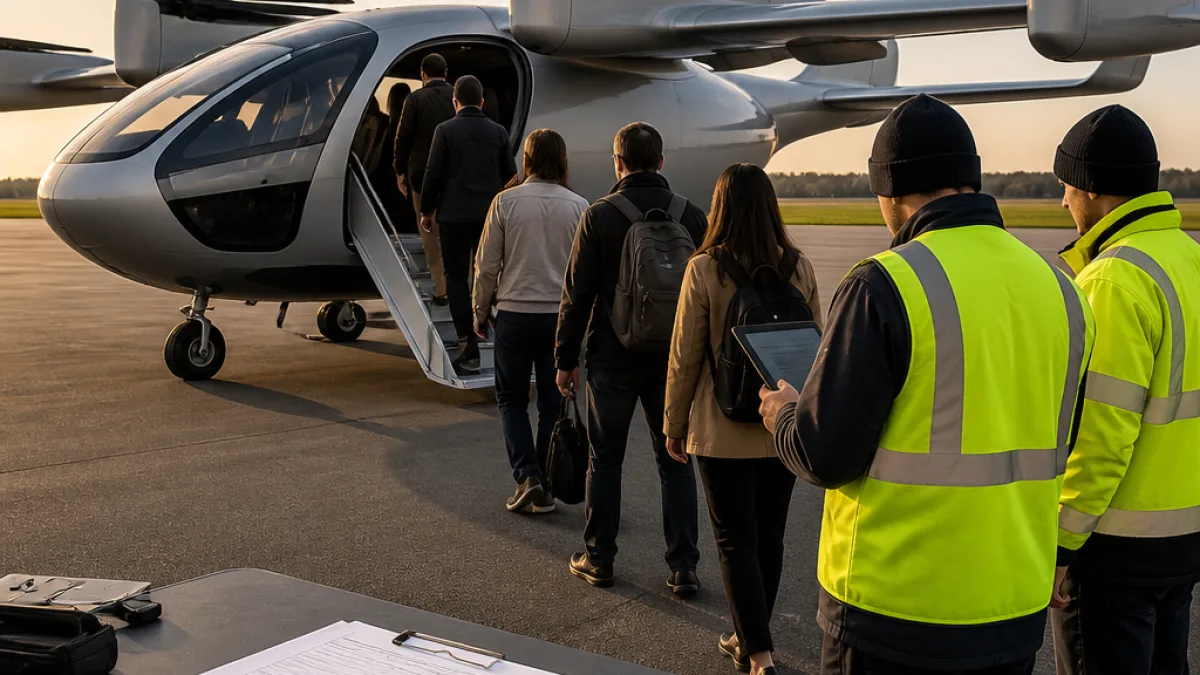
The authorisation, granted on 21 October 2026, enables BETA to conduct market survey flights that place prospective users in the aircraft during demonstrations and evaluations in a broader range of operating environments than previously permitted. The FAA described the decision as the first such authorisation for an electric VTOL aircraft in the United States.
Regulatory limits remain. The certificate explicitly does not authorise commercial passenger service; BETA must continue to pursue conventional type certification before the ALIA-A250 can enter commercial operations.
“The FAA is committed to working with American innovators to safely integrate these new aircraft into our national airspace, while maintaining the rigorous safety standards that have made the United States a global leader in aviation,” FAA Administrator Bryan Bedford said in the agency's announcement.
Operational use cases and first flight under the certificate
The FAA noted that market surveys conducted under the certificate will help BETA and potential operators gather information on practical applications for the ALIA-A250, including:
- regional transportation
- cargo delivery
- medical operations
BETA completed the first flight under the new approval on 20 October 2026, one day before the FAA’s public announcement. The initial demonstration covered a 20-minute sector of 34 nautical miles to Burlington, according to the company’s public statements.
Where this sits in the certification process
The Special Airworthiness Certificate advances the ALIA-A250 from laboratory and pilot-only test regimes into a controlled phase of real-world demonstrations with non-company participants aboard. It remains a provisional step: full type certification, sought through the FAA’s established certification pathways, is required before any revenue-generating passenger service or standard commercial operations may begin.
| Item | Detail |
|---|---|
| Manufacturer | BETA Technologies |
| Aircraft | ALIA-A250 |
| FAA approval | Special Airworthiness Certificate for market survey flights |
| Permitted activity | Flights with prospective customers, operators and stakeholders aboard |
| Commercial passenger operations | Not authorised by this certificate |
| First flight under approval | 20 October 2026 (20-minute, 34 nm sector to Burlington) |
The FAA framed the authorisation as part of its wider engagement with new aircraft technologies, emphasising integration into national airspace while maintaining established safety standards. For BETA, the step is intended to bring potential customers closer to the aircraft’s operational characteristics and to collect evaluative feedback under representative conditions.
Market survey flights can provide operators, carriers and other stakeholders with direct exposure to aircraft performance, ground-handling needs and passenger or mission interfaces, but they are not substitutes for the comprehensive compliance demonstration required in type certification programmes that underpin routine commercial service.
For manufacturers and investors tracking the development of electric VTOLs, the FAA’s certificate for the ALIA-A250 marks a regulatory milestone that enables expanded demonstrations with prospective end users while leaving the principal regulatory hurdle — full aircraft certification — in place.