Chinese company Air White Whale has completed a flight test of its W5000 unmanned cargo aircraft, which is designed to carry up to five tonnes of freight over distances of as much as 2,600 kilometres without a pilot on board.
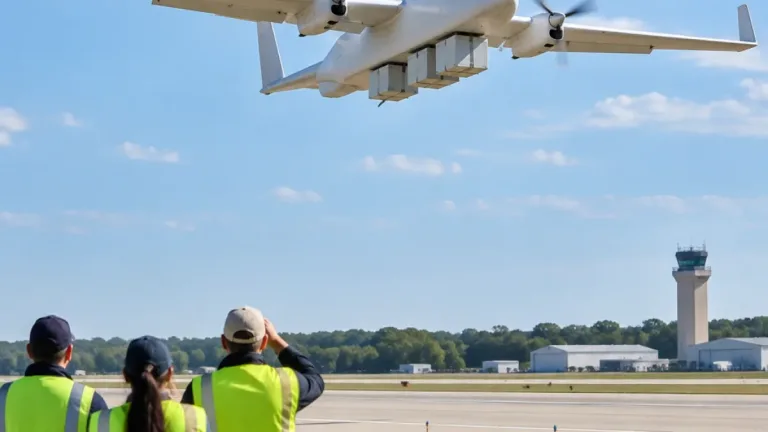
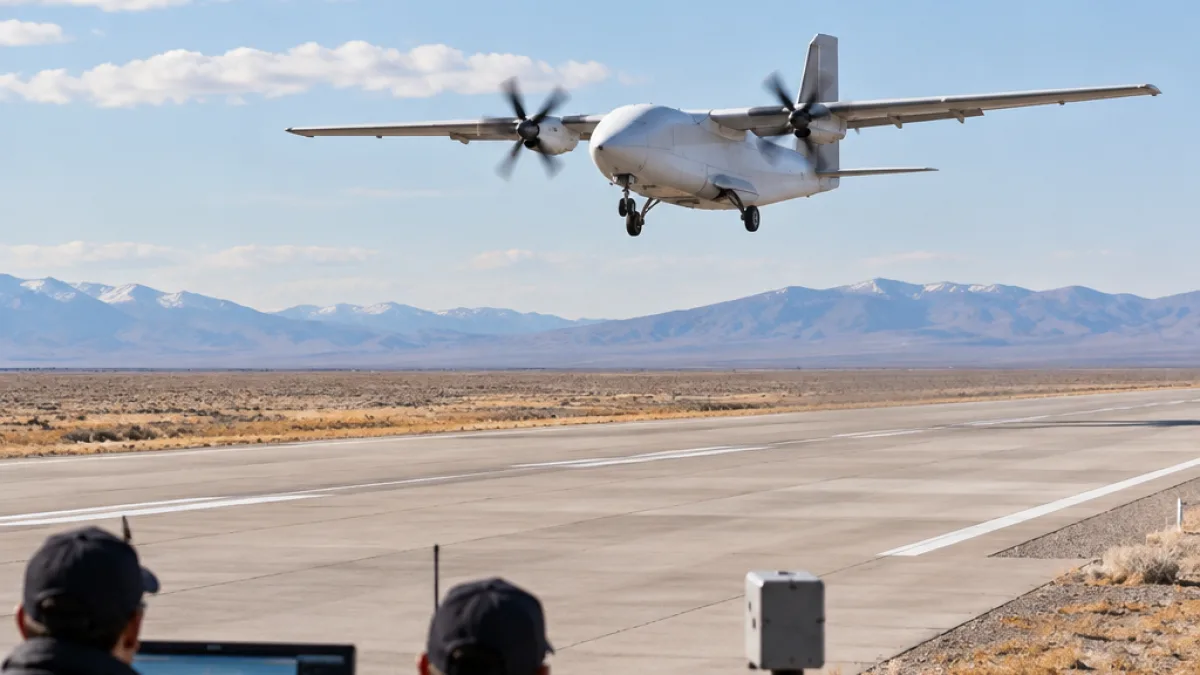
The 30-minute test took place on 14 November at an airfield near Ordos in Inner Mongolia. The aircraft used a take-off run of approximately 600 metres before climbing to 1,000 metres above the airfield. During the flight, it carried out a climb, level flight, turns, descent and landing.
Air White Whale says the W5000 is the world’s largest unmanned cargo aircraft by stated payload capacity. The claim relates to the aircraft’s proposed ability to carry five tonnes; the test flight itself was an assessment of the aircraft and its systems rather than a commercial freight operation.
Systems and aircraft performance assessed
Engineers used the flight to examine the stability of the controls, engine performance, on-board electronics and ground-based control systems. The aircraft is powered by two Chinese-made turboprop engines and makes extensive use of carbon composite materials in its fuselage design.
The W5000 is intended primarily for regular regional freight services rather than the role performed by heavy transport aircraft. Its published specifications are:
| Specification | W5000 |
|---|---|
| Maximum take-off weight | 10.8 tonnes |
| Maximum payload | 5 tonnes |
| Range | Up to 2,600 kilometres |
| Maximum cruising speed | 526 km/h |
| Wingspan | 22.7 metres |
| Fuselage length | 22.89 metres |
| Cargo compartment | More than 65 m³ |
Commercial service planned for late 2027
The aircraft uses an autonomous control system supervised by operators on the ground. Air White Whale’s calculations indicate that one ground crew will be able to monitor six or seven aircraft simultaneously. The absence of a cockpit and associated operating equipment is expected by the developer to reduce the aircraft’s weight and operating costs.
Commercial operations are scheduled to begin at the end of 2027. That timetable remains a future target: the completed flight was a test of the aircraft’s handling, propulsion, electronics and remote-control functions, and does not by itself establish that the W5000 has entered service or completed the certification and operational approvals required for commercial freight flights.
- Test location: an airfield near Ordos, Inner Mongolia
- Test duration: 30 minutes
- Planned payload: up to five tonnes
- Planned commercial operations: end of 2027