KDDI, KDDI SmartDrone and Wing Aviation are planning to begin autonomous drone deliveries from Lawson convenience stores to households in selected parts of Japan during 2027, creating a potential nationwide model for last-mile air logistics.
The initial service will carry groceries and everyday necessities. The companies have not yet disclosed the launch regions, delivery charges or the process customers will use to place orders. They said the operation would be expanded progressively in collaboration with local authorities and businesses.
A service designed around Lawson’s national network
KDDI said the partners intend eventually to add over-the-counter medicines and other small retail products. The stated long-term plan is to introduce the service successively across Lawson’s network of approximately 15,000 stores in Japan, rather than limit the operation to a single pilot location.
| Planned element | Details |
|---|---|
| Launch | During 2027, in selected areas |
| Initial cargo | Food and daily necessities |
| Aircraft | Wing autonomous drones |
| Future products | Over-the-counter medicines and small retail items |
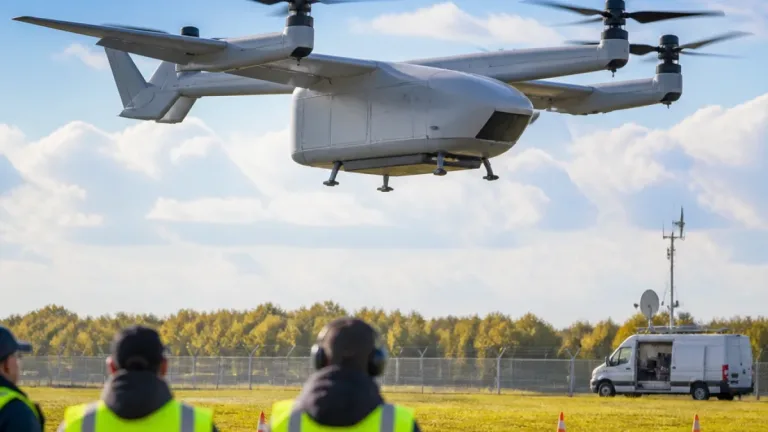
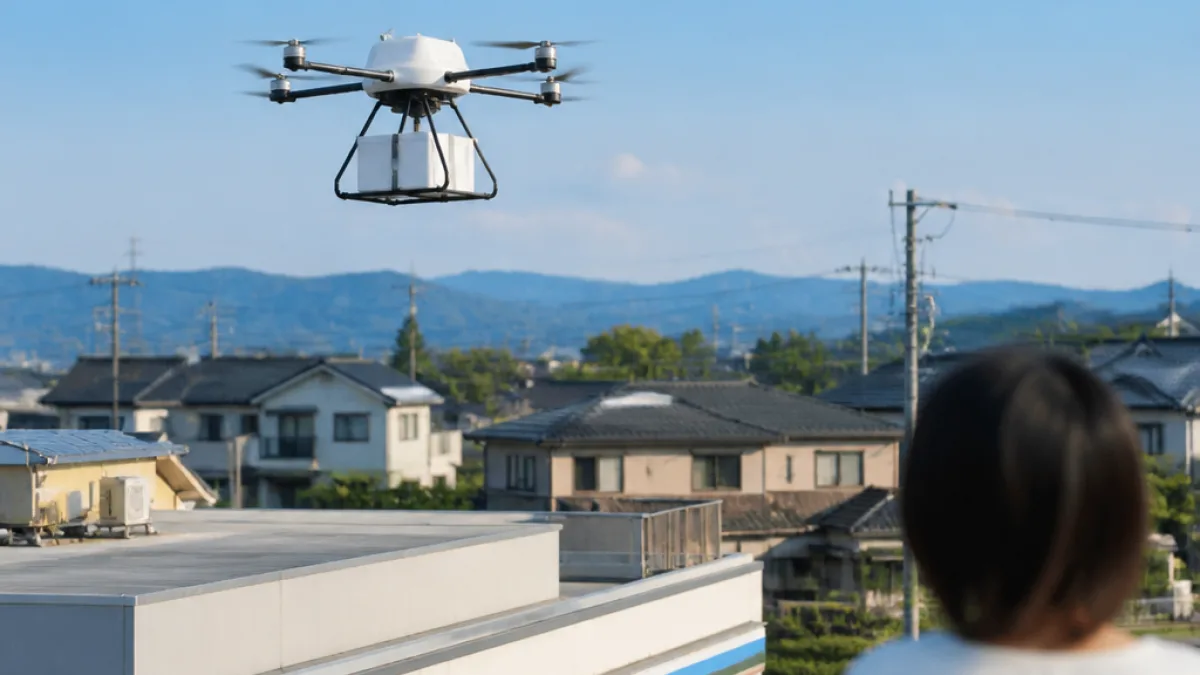
The aircraft supplied by Wing is described as measuring 1.5 metres in length and weighing about 5.3 kilograms. It can carry approximately 1 kilogram of cargo and has a stated range of about 19 kilometres. Cameras and artificial intelligence are used to identify and avoid obstacles during flight.
Networks, operations and automated handover
The proposed delivery system will combine Wing’s flight-control technology, flight-management systems and automated equipment for handing packages to customers with KDDI Group’s communications infrastructure and experience operating drones in Japan. That division of responsibilities is intended to link the aircraft, the retail network and the customer handover process into one service.
The companies cited several pressures behind the project, including Japan’s ageing population, the difficulty some people face in completing routine shopping, time constraints affecting dual-income households and a shortage of delivery drivers. They said drone delivery could allow residents to receive goods at home while reducing the burden of travelling to shops and improving delivery efficiency.
Disaster-response logistics are also being considered. KDDI and Wing said the service could eventually be used to move supplies during emergencies, although the announcement did not set out a timetable or operating conditions for that application.
Wing’s existing delivery experience
Wing was separated from a Google research laboratory in 2012. By October 2026, it said cumulative residential deliveries had exceeded 1 million. In the United States, the company operates in five regions and handles several thousand deliveries each day, typically taking goods to a customer-designated location such as a garden within 30 minutes of an order.
The Japanese programme remains a planned service rather than a launched operation. Its operating areas, customer charges and ordering arrangements are still to be defined, while the partners develop the rollout with local governments and regional businesses.