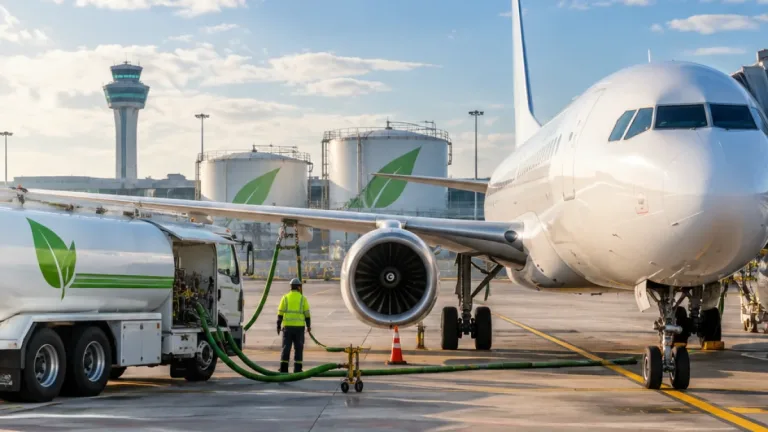
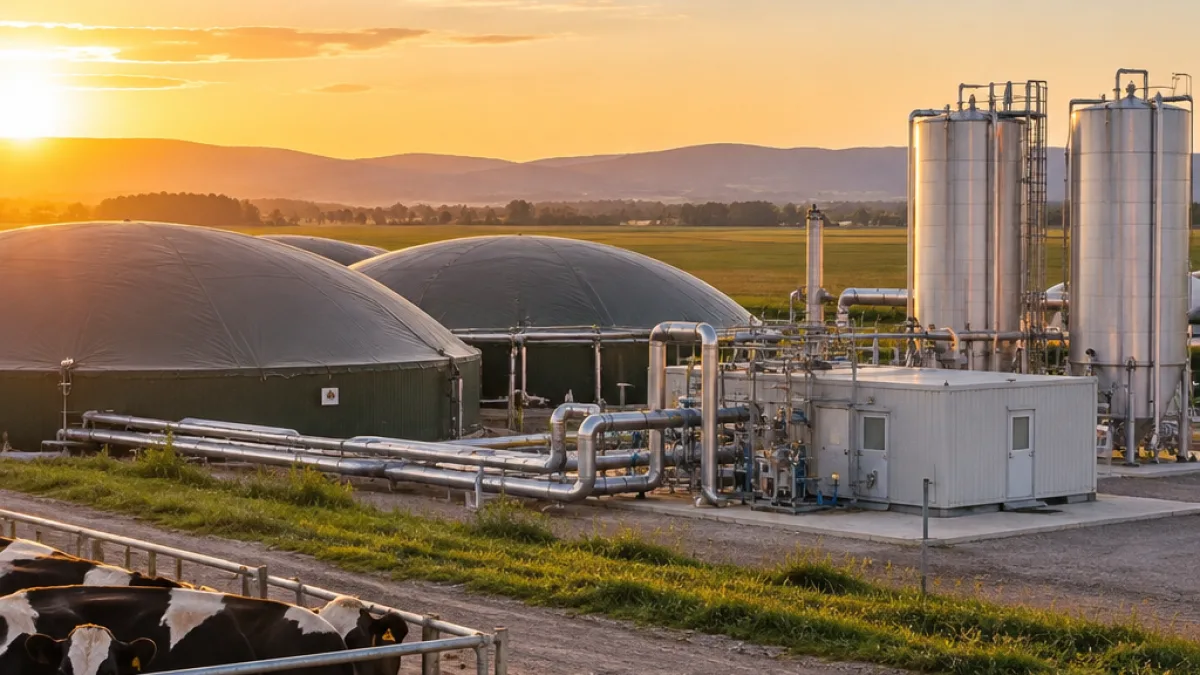
Circularity Fuels has raised $7 million in a Series Seed funding round to advance a process that converts livestock-waste biogas into sustainable aviation fuel (SAF) at or near the farm where the feedstock is produced.
The round was co-led by DCVC and takes the company’s total funding to approximately $17 million. That total includes non-dilutive support from the US Advanced Research Projects Agency–Energy (ARPA-E) and the National Science Foundation, as well as private investment.
From pilot validation to industrial scale
Circularity Fuels said the financing will support the transition from pilot work to commercial development. The company is refining its demonstration plant, beginning work on a planned 75-barrel-per-day industrial-scale facility and continuing efforts to secure offtake agreements for the fuel.
In June, the company completed what it described as the first end-to-end conversion of raw dairy biogas into jet fuel meeting ASTM D7566 Annex A1 specifications. The six-month pilot was conducted near Madera, California, and used biogas from a dairy operation.
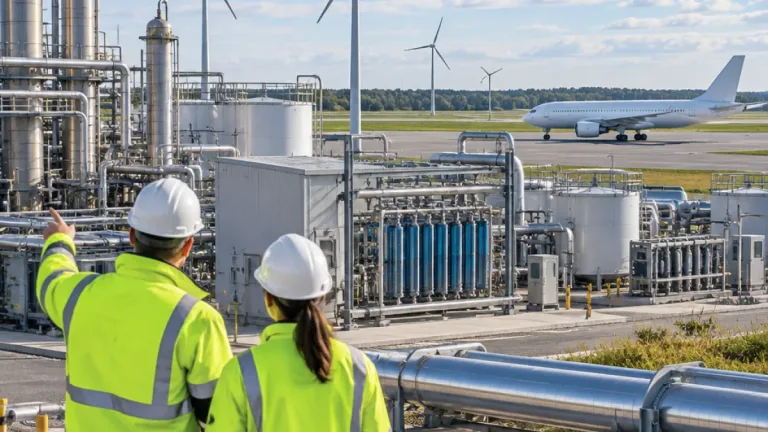
The process is designed around two modular, skid-mounted systems rather than a single large refinery. Circularity’s electrified “Ouro” reforming reactor converts methane and carbon dioxide into syngas. A separate “Aion” Fischer–Tropsch reactor then converts that intermediate product into standard Jet A fuel on site.
Using a wider feedstock base
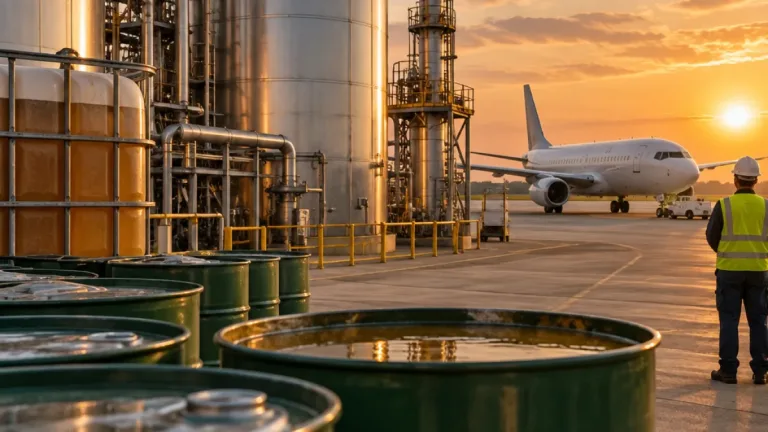
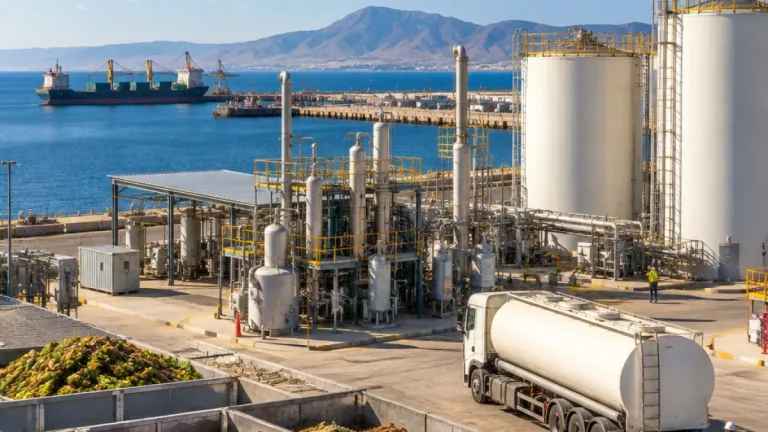
Livestock manure is the company’s stated feedstock. Circularity said large livestock operations in the United States generate nearly one trillion pounds of manure each year, while fewer than 6% capture the resulting biogas. The gas is made up of approximately two-thirds methane and one-third carbon dioxide, according to the company.
That approach is intended to address two constraints that Circularity identifies in the SAF market: limited access to suitable feedstocks and the cost and logistics associated with transporting material to centralised production sites. By placing the equipment on the farm, the company is seeking to process biogas locally and produce aviation fuel without relying on a conventional central refinery model.
- Feedstock: livestock manure converted into biogas
- Processing: on-farm reforming followed by Fischer–Tropsch synthesis
- Demonstrated output: Jet A meeting ASTM D7566 Annex A1 specifications
- Next planned step: a 75-barrel-per-day industrial-scale facility
Circularity said its system requires roughly one-fifth of the projected capital cost of conventional approaches, although that is a company estimate rather than an independently verified result. The business is positioning distributed production as a way to increase the number of viable SAF feedstock locations while avoiding dependence on a narrow group of waste oils and fats.
Funding follows a limited SAF supply base
The company said jet fuel prices have risen by 75% during 2026 amid geopolitical turmoil, while SAF still represents less than 1% of global fuel consumption. It also said the US domestic SAF market relies almost entirely on used cooking oil and beef tallow, feedstocks that are limited in volume.
Circularity’s new funding therefore arrives as the company attempts to move beyond a completed technical demonstration and establish a repeatable commercial model. Its immediate programme combines further plant development with negotiations over fuel offtake, while the proposed 75-barrel-per-day facility will provide the next test of whether its modular process can operate at a larger scale.