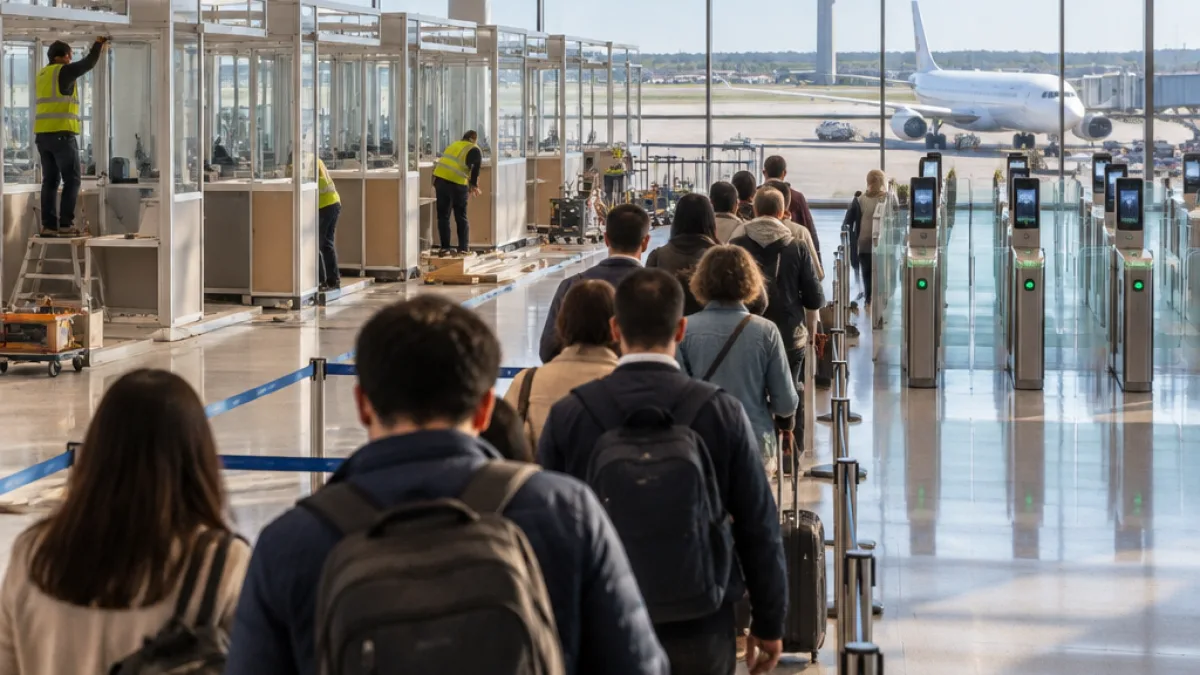
Brussels Airport is to add eight manual border-control positions in its arrivals area by December 2026, responding to longer immigration queues associated with the European Union’s Entry/Exit System (EES).
The airport also plans to install six additional automated e-gates in early 2027. Brussels Airport said the measures are intended to increase capacity as non-EU travellers undergo biometric registration, including the capture of facial images and fingerprints.
Manual and automated capacity to increase
According to Brussels Airport, processing times for arriving passengers who require visas have become two to three times longer during morning peak periods since the EES was introduced. The airport said waiting times at some European airports have reached between two and four hours.
| Measure | Planned timing | Capacity effect |
|---|---|---|
| Eight manual border-control positions | By December 2026 | Arrival capacity to rise by 66% |
| Six additional automated e-gates | Early 2027 | Automated processing capacity to rise by 50% |
The eight manual positions will raise arrival border-control capacity by 66%, while the additional e-gates are expected to increase automated processing capacity by 50%. The airport had already expanded manual border-control provision in both its arrivals and departures areas.
Pre-registration technology remains delayed
Brussels Airport has invested in 60 pre-registration kiosks, which are intended to allow passengers to complete parts of the EES process before reaching immigration. Their operation has been delayed by technical problems, however, limiting the airport’s ability to use the additional technology as part of the immediate response to queues.
The airport is calling for improvements to the wider border-processing arrangements, including:
- faster biometric checks;
- a pre-registration application that is widely available; and
- greater flexibility during periods of severe congestion.
Brussels Airport said it is working with government departments and relevant authorities to improve border processing and reduce waiting times for international passengers. The planned infrastructure changes therefore form part of a broader effort to manage the operational impact of the EES, rather than a change to the system’s biometric requirements.
The measures are focused on arrivals, where the airport has reported the most significant increase in processing times for visa-required passengers. The additional manual positions are scheduled for completion before the end of 2026, with the further e-gates planned for early 2027.